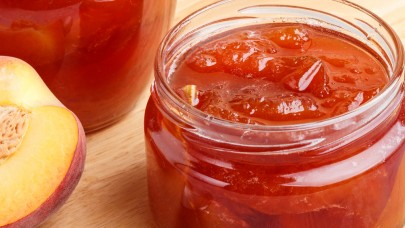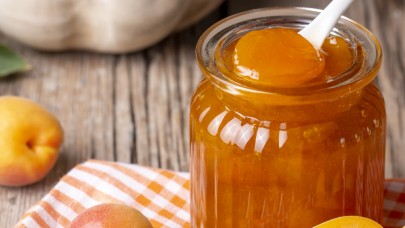


Ingrediente: prune, indulcitor natural extract uscat din frunza de stevie Rebaudiana; fara zahar adaugat
Declaratie nutritionala:
- Glucide din care zaharuri 2.6g/100g
- Grasime din care acizi grasi saturati 0,04/100g
- Valoare energetica 163kcal/100g
- Proteine 0,7/100g
- Clorura de sodiu 0,03/100g
Gemurile fara zahar adaugat au un aport caloric mai mic, fiind o optiune mai sanatoasa pentru persoanele care doresc sa isi mentina greutatea sau sa slabeasca. Lipsa zaharului rafinat reduce impactul asupra nivelului glicemiei, fiind benefic pentru persoanele cu diabet sau rezistenta la insulina. Fructele utilizate in gemurile fara zahar isi pastreaza mai bine vitaminele si antioxidantii, contribuind la sanatatea organismului si la combaterea stresului oxidativ. Fara adaos de zahar, gemurile pastreaza aroma naturala a fructelor, oferind o experienta gustativa mai intensa si autentica. Zaharul favorizeaza aparitia cariilor dentare, iar consumul de gemuri fara zahar poate contribui la mentinerea sanatatii orale. De asemenea, aceste gemuri sunt compatibile cu regimurile low-carb, keto, paleo sau alte diete care exclud zaharul rafinat. Optand pentru gemuri fara zahar, poti beneficia de un produs mai sanatos, cu un gust natural si mai putin impact negativ asupra sanatatii.
The plum tree (Prunus domestica) is a fruit tree from the Rosaceae family. Its fleshy, dark blue or yellow fruits find multiple improvements in the food industry, for preserves or jams, being consumed fresh. Its unripe fruits are sometimes enhanced by the combination with pickles. It grows in areas of high fertility, preferably hilly. In Romania, the plum has been cultivated for hundreds of years, being and remaining one of the most popular fruit species. The plum can be found everywhere, on the hills and in the plains, in family gardens or in natural massifs (being propagated by pits, or "drajon"), which is proof that the plum has easily adapted to the most varied climate and soil conditions in Romania. According to the information from the history of fruit growing in Romania, according to the area occupied by plums and according to the production, Romania was ranked second in Europe for a long time.
Some of the foreign varieties introduced in Romania have found a second homeland here. This is the case of the varieties: Anna Spath, Agen, Italian Eggplant, and more recently Stanley. Currently, the basic assortment in the main fruit centers is made up of the varieties: Fat Tuleu, Early Tuleu, Romanian Eggplant, Centenar, Valor, Pescarus, Silvia, Blue Free.
Plums have a high content of fiber, carbohydrates, A and B vitamins, potassium, calcium and phosphorus. Consumed frequently, they strengthen the nervous system, combat fatigue and stimulate intestinal transit. In 2018, the area harvested with plums was 65.9 thousand hectares, resulting in a total production of 842.1 thousand tons (+397.2 thousand tons compared to 2017) and an average production of 4732 kg/ha. In Tulcea county, the production of plums was 531 tons in 2018, an increase of +283 tons compared to 2017. In Romania, the plum occupies the first place, as the area of the total area with orchards.